Reduce booking friction and manual follow-up in small clinics
Incomplete intake information
Home
Solution
How It Works
Contact
Meridux clinic workflow solution
Meridux provides a practical clinic workflow system for structured patient intake, duplicate control, returning-patient identification, confirmation handling, and clinic-side logging.
Built to save staff time, reduce avoidable errors, and improve response speed without adding more administrative burden.
Small clinics often lose time in routine intake and follow-up
Manual appointment handling can create unnecessary friction. Staff may need to read incomplete submissions, check for duplicates manually, determine whether a patient is new or returning, send confirmation messages, and maintain internal records across scattered steps. The result is slower response, inconsistent handling, and avoidable administrative effort.
Submissions often require extra checking before staff can act.
Repeated manual checks
Slower patient response
Duplicate handling and status checking consume staff time.
Fragmented follow-up can delay acknowledgment and confirmation.
A structured clinic workflow built for speed and consistency
This system is designed to help small clinics manage patient intake in a more reliable way. It organizes incoming submissions, checks for duplicate cases, identifies returning patients, supports confirmation handling, and records the interaction for internal visibility. The objective is not to add complexity, but to reduce it.
One practical workflow for intake, checking, confirmation, and logging
What the system handles
The workflow is designed around common operational tasks that consume staff time in small clinics.
Structured patient intake
Duplicate control
Returning-patient identification
Confirmation workflow
Clinic-side logging
Captures incoming information in a more organized and usable format.
Helps reduce repeated or conflicting intake activity.
Distinguishes repeat cases more consistently.
Supports clearer next-step handling after intake.
Creates better internal visibility of intake activity.
Best Fit For
Small clinics that want to reduce administrative friction in appointment intake and follow-up, especially where staff currently manage bookings, confirmations, and patient handling through manual steps.
Suitable for clinics seeking a practical operational improvement rather than another complicated software layer.
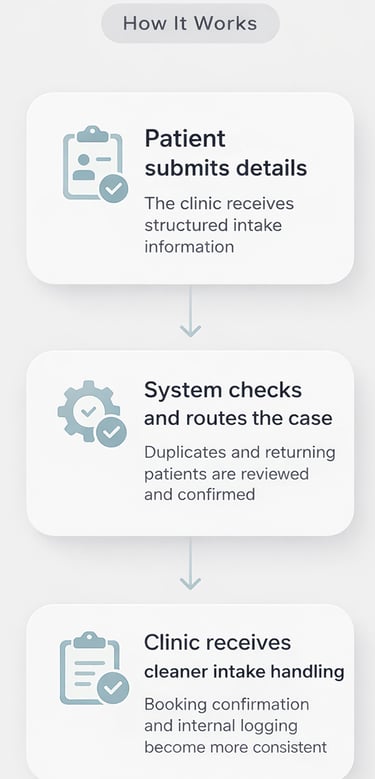
How it Works
Patient Submits details
The clinic receives structured intake information instead of fragmented messages.
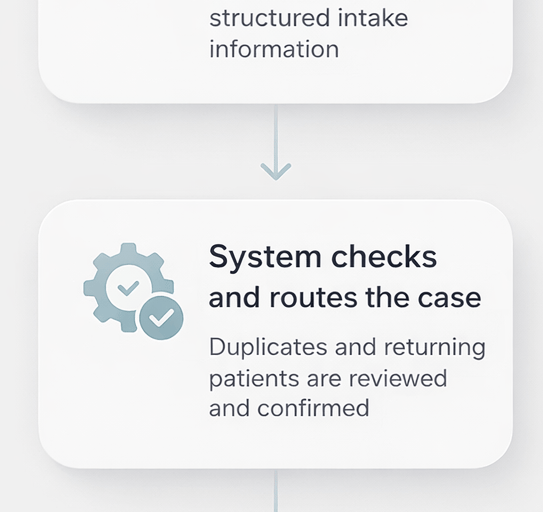
System checks and routes the case
Duplicates and returning patients are reviewed and confirmed
Clinic receives a cleaner operational process
Booking confirmation and internal logging become more consistent
See whether this fits your clinic
If you run a small clinic and want to reduce manual intake effort, duplicate handling, and response delays, contact Meridux to discuss the workflow.
Meridux
Systems that save time and reduce friction.
© 2026 Meridux. All rights reserved.
Operational Value for small clinics
The value of the system lies in reducing friction in everyday clinic operations, particularly where appointment intake and follow-up are still handled manually.
Less manual checking and follow-up
Fewer avoidable booking errors
Faster response to incoming patients
More consistent handling of repeat cases
Better internal visibility of intake activity


Small clinics that want to reduce administrative friction in appointment intake and follow-up, especially where staff currently manage bookings, confirmations, and patient handling through manual steps.
Suitable for clinics seeking a practical operational improvement rather than another complicated software layer.